
The Periodic Invoicing system (RBR - Recurring Billing Rounds) automates the creation and processing of recurring municipal service invoices, such as utilities, waste management, and other regular municipal services.
Accessing Periodic Invoicing
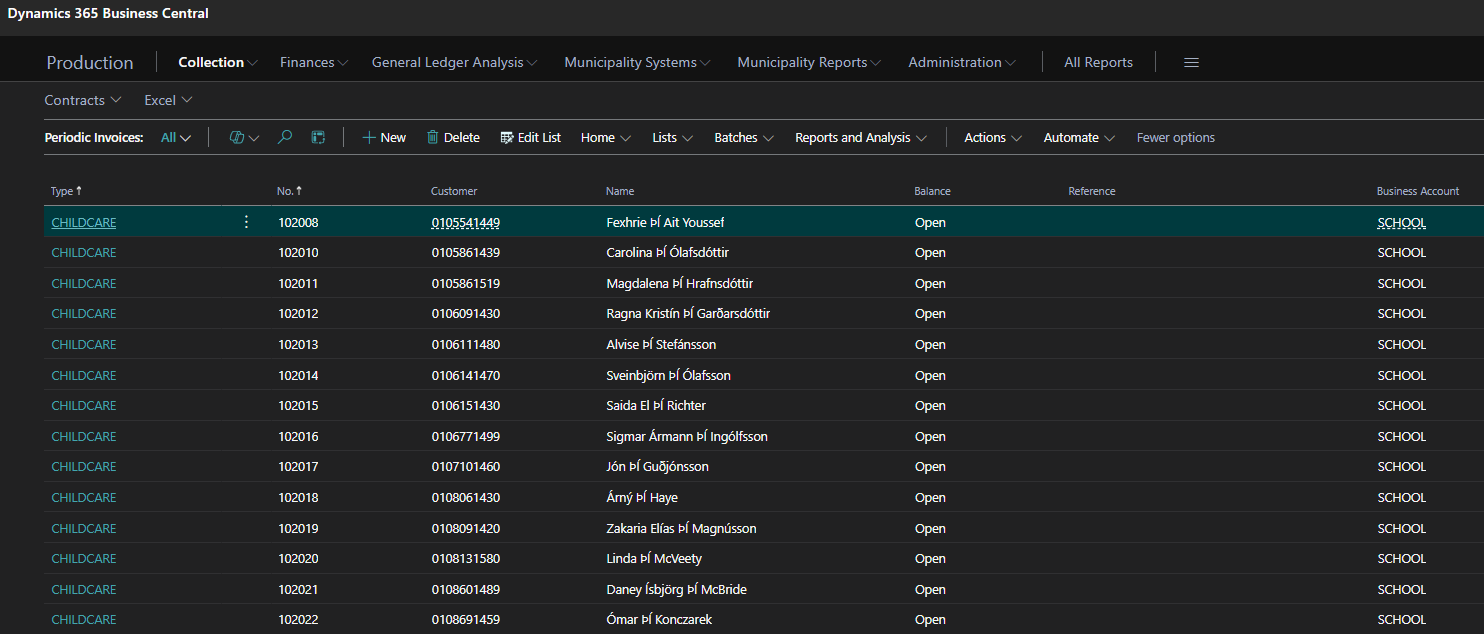
Navigate to Collection > Contracts > Periodic Invoices from the Municipal Manager Role Center.
Setting Up Invoice Periods
Creating New Invoice Periods
-
In the Periodic Invoices list, navigate to Batches, and click Invoice Periods, and there you click New.
-
Enter Period Information:
-
Period: Month and year (e.g., "2025_01" for January 2025)
-
Invoice Type (Choose the correct type that will be used to create invoices for)
-
To/From Date: Date when invoices will be generated
-
Posting Date: Date when the invoices should be posted
-
Description: Descriptive text (e.g., "Municipal Services January 2025")
-

Invoice Types Configuration
-
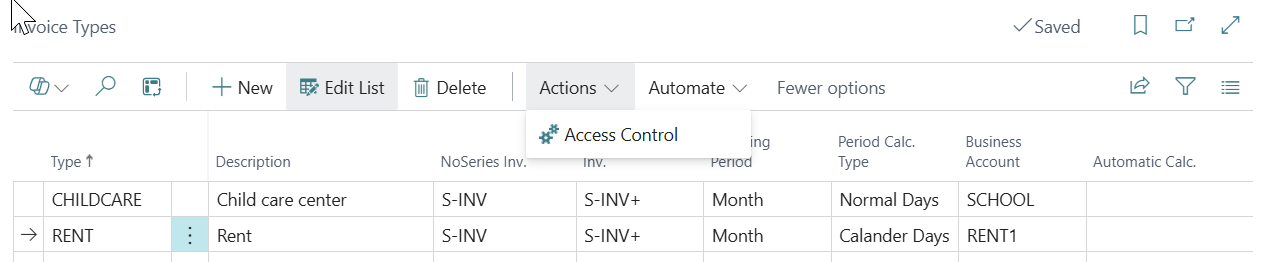
Select Invoice Types to include in this period:
-
Utilities: Water, electricity, heating
-
Waste Management: Garbage collection, recycling
-
Municipal Services: Parking, facilities usage
-
Property Services: Maintenance, cleaning
-
Managing Invoice Lines
Adding Service Lines
-
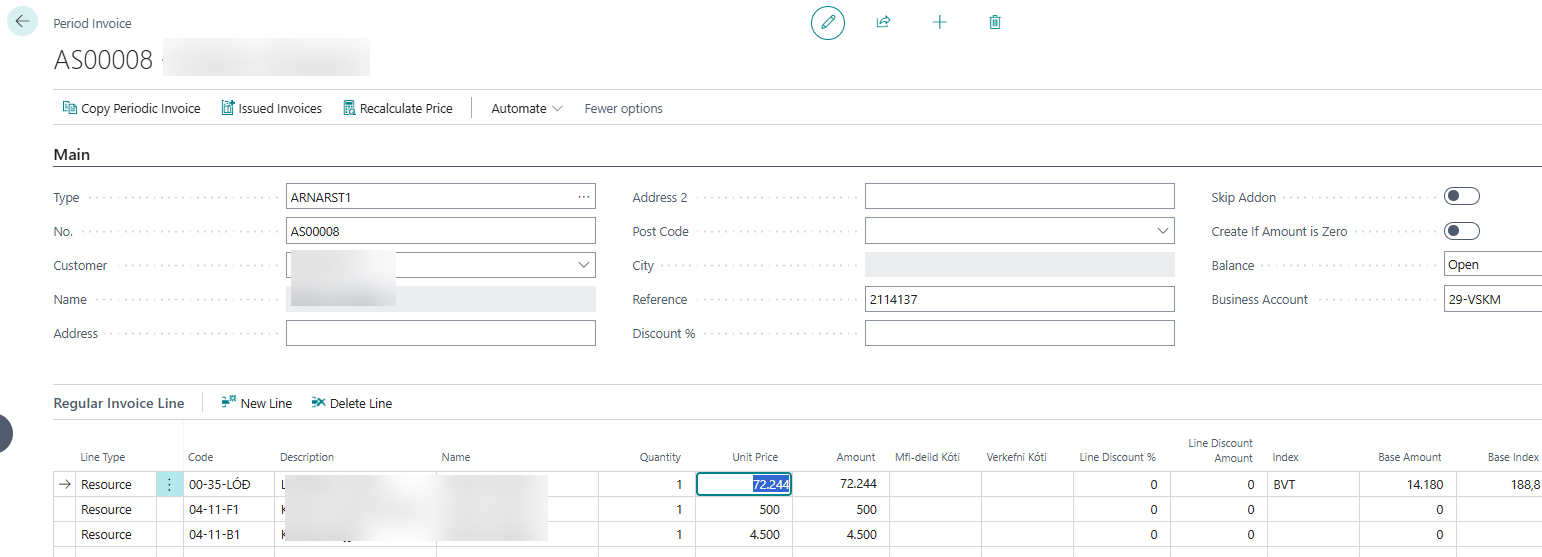
Navigate to Invoice Lines from the Period Invoice card
-
Click New to add services
-
Configure each line:
-
Line Type: Service type (Item, Resource, G/L Account)
-
Code.: Service item number
-
Description: Service description, comes from name of no.
-
Name: Comes from Header/Main
-
Quantity: Amount of service
-
Unit Price: Price per unit
-
Amount: Calculated total amount
-
Calculation Methods
-
Fixed Amount: Same amount every period
-
Usage-Based: Calculated from meter readings or usage data
-
Percentage: Based on percentage of property value
-
External Data: Imported from HMS or other systems
Customer Assignment and Business Accounts
Automatic Customer Assignment
The system automatically assigns customers based on:
-
Business Account Links: Previously established relationships
-
Property Ownership: From property management system
-
Service Agreements: Existing service contracts
-
Default Settings: Fallback assignment rules
Manual Override
When automatic assignment fails:
-
Navigate to unassigned lines
-
Select appropriate customer manually
-
Create new business account link if needed
-
Document assignment reason
Invoice Processing Workflow
Processing Steps
-
Validate Data: Check all lines have customers assigned
-
Clink on “Create Invoices for the Period”: Create individual customer invoices
-
Status in “Invoicing Periods” becomes “Invoice”
-
-
Review Exceptions: Handle any processing errors
-
Click on “Post Invoices for selected time period”: Transfer to customer ledger
-
Status in “Invoicing Periods” becomes “Posted Invoice”
-
-
Create Payment Files: Generate bank payment requests
Integration with Financial Reporting
General Ledger Impact
Periodic invoicing automatically posts to:
-
Revenue Accounts: By service type and business account
-
Customer Accounts: Individual customer balances
-
VAT Accounts: Tax implications of services
-
Departmental Accounts: Cost center allocations
Budget Integration
-
Compare actual billing to budgeted amounts
-
Analyze variances by service type
-
Track performance against targets
-
Support budget planning for future periods
Best Practices
Period Management
-
Create periods in advance to allow for setup time
-
Use consistent naming conventions for easy identification
-
Document any manual adjustments for audit trails
Processing Schedule
-
Process invoices early in the month
-
Allow buffer time for exception handling
-
Coordinate with payment processing schedules
-
Communicate billing dates to customers
The Periodic Invoicing system ensures consistent, accurate billing of municipal services while providing flexibility for various service types and billing models.